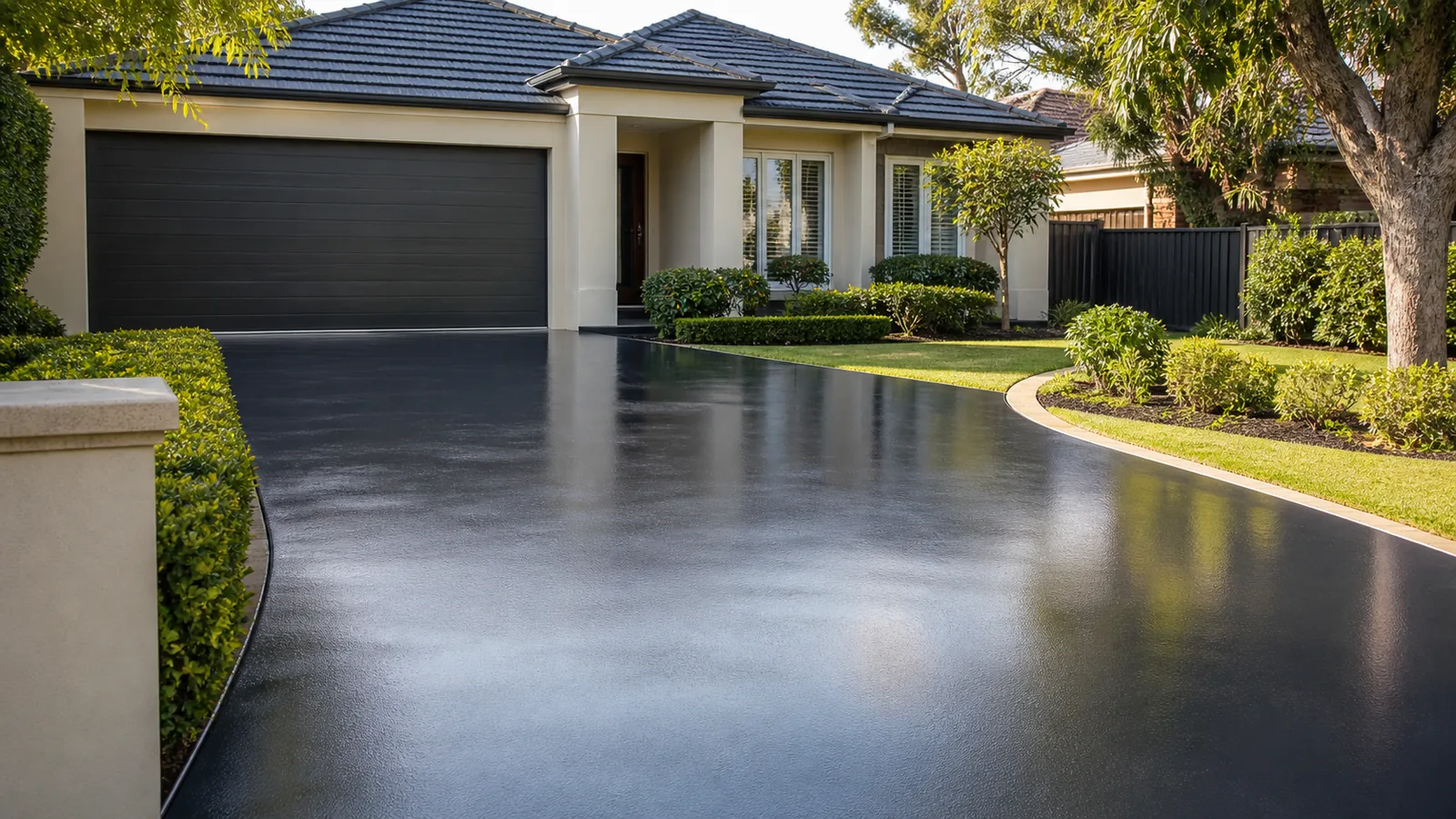
Establish what is beneath the pavers
Before booking a paver sealing job, establish whether your driveway was designed to let water pass through the pavement. Ordinary concrete pavers with visible joints are not automatically a permeable driveway. A purpose-designed system combines the surface units, joint material and underlying construction. A protective treatment therefore needs to suit the whole arrangement, not just produce an attractive finish on the face of each block. If the installation documents mention drainage paving, infiltration, detention or an underdrain, put those documents in front of the contractor before accepting a standard clean-and-seal package.
Start with the paving invoice, landscape plan and any drainage drawing supplied when the driveway was built. Look for the actual paver name and the name of the installer. Photograph the pavement from above and the joint filling at close range, without digging it out. Include any inspection covers or visible outlets. This gives a contractor a useful starting point even when the original paperwork is incomplete. It also prevents a familiar-looking paving pattern from being mistaken for a different construction system with very different maintenance needs.
The distinction that changes the sealing decision
Adbri describes Ecotrihex as a paver used within a permeable paving system. Its paving FAQ explains that drainage openings contain small aggregate so water can pass through the surface layers. That is a useful distinction when reviewing your own driveway: the spaces between units may have a drainage function. They are not necessarily empty joints waiting for ordinary paving sand, grout or a coating that binds everything together.
Ask the proposed applicator to explain which parts will be treated and which parts must continue to admit water. The answer should identify the pavement rather than rely on phrases such as breathable, outdoor grade or suitable for pavers. Those descriptions concern particular product properties; they do not, by themselves, demonstrate compatibility with your drainage design. If the original system cannot be identified, a sensible first appointment is an investigation. Committing to a full decorative coating while the water route remains unknown creates an avoidable decision that may be difficult to reverse.
Decide whether you need stain protection or drainage recovery
Owners often ask about sealing because the paving looks dirty. Separate that concern from slow drainage. A parking patch marked by a vehicle, a band of leaf residue beside a garden and water remaining across the entire driveway are different observations. Make a simple sketch showing where each occurs. Take photographs before cleaning, because the distribution of dirt and water can help the specialist decide what needs investigation. A clean-looking face is an appearance outcome; it does not establish that the pavement is admitting and managing water as intended.
If your main concern is discolouration, ask for a cleaning assessment with a small trial area before discussing protection. If the concern is ponding or overflow, ask who will investigate the drainage function and how they will assess any improvement. A sealing contractor may need to work with the original paving installer or a drainage professional. Keep these scopes distinct in the quotation. Otherwise, you may pay for an attractive surface and assume a water problem has been fixed even though nobody was engaged to diagnose it.
Keep landscape changes in the conversation
Describe changes around the driveway as well as the driveway itself. A raised garden bed, new mulch, soil carried across the paving during landscaping or a changed downpipe outlet can be relevant to an inspection. You do not need to decide which change caused the problem. Give the dates and locations so the person assessing the pavement can consider them. If material repeatedly collects along the same edge, photograph where it arrives from. Cleaning that edge without addressing the source can leave you facing the same task again.
For a Central Coast property, the useful local detail is the actual relationship between the driveway, gardens, street and house. A Woy Woy owner might need to explain an existing low garden edge; a Gosford owner might need to show water arriving from an uphill paved area. These are inspection questions, not assumptions about every property in those suburbs. Provide your suburb for service access, then describe what happens at your particular address. A contractor cannot determine the construction or the direction of water flow from the postcode alone.
Ask for a cleaning method that protects the system
A quote that simply says pressure clean, re-sand and seal deserves further questions when the pavement is permeable. Ask what material is currently in the joints, what the cleaning method will remove and what will replace it. Request a clear boundary between cleaning the surface and renewing any drainage joint material. If material needs replacement, the specification should come from the identified paving system. Do not accept an unspecified bag of joint filler merely because it is the product normally used on conventional domestic paving.
Before cleaning starts, agree on how adjacent surfaces, garden material and wash residues will be managed. Ask how the contractor will stop the work spreading contamination onto clean sections or into a drainage inlet. There should also be a practical plan for keeping vehicles and deliveries away while the work is underway. These questions do not require you to operate specialist equipment. They establish whether the contractor has thought through the consequences of cleaning this pavement, rather than pricing it as an uninterrupted concrete slab with decorative lines.
Evaluate a proposed sealer in writing
If protection is still proposed after the system is identified, ask for the exact product name, current technical information and written advice addressing your paving arrangement. That advice should distinguish treatment of the paver faces from treatment of the joints. Ask whether the recommendation depends on existing coatings being removed and whether an on-site trial is required. Keep the reply with the quote. A salesperson's assurance that a product has been used on many driveways is not a substitute for answering the compatibility question for yours.
Review the intended benefit carefully. Is the product being proposed to change colour, reduce certain stains, alter sheen or stabilise something? Each benefit should be described separately. Ask what the treatment cannot achieve, including whether it has any role in the water problem you originally reported. A product may be suitable for a paver face without being the right answer to the owner's main concern. Being explicit about the desired outcome makes it easier to compare a cleaning-only proposal against a proposal that adds protection after inspection.
Compare the sample with the untreated area
Where a treatment is supported for the system, agree on a representative sample and how it will be reviewed. Include an area that has the same exposure and existing condition as the work being quoted. A spare unused paver can show colour, but it may not represent the absorption, contamination or old treatment on the installed driveway. Ask which parts of the sample are being assessed visually and which aspects require the specialist's separate checks. A pleasing colour is only one reason to accept or reject the proposed work.
View the sample beside the untreated paving and adjacent materials. Consider the view from the house and the street, especially if only part of the driveway will receive treatment. Ask about the appearance of future replacement pavers and whether a local repair can be blended into the finish. Keep photographs and the agreed product details, but avoid treating a photograph as a precise colour reference. The point of the sample is to make the proposed result tangible before a full area is treated and before access arrangements are committed.
Set a clear inspection and handover boundary
The work order should say whether the contractor is cleaning, applying a protective treatment, renewing specified joint material or investigating drainage. If more than one trade is involved, identify who decides that the pavement is ready for the next stage. A drainage investigation should not disappear into a general exclusions paragraph while the visible coating proceeds. Equally, a cleaning contractor should not be expected to certify an unknown underground system. Clear responsibilities let you obtain the right advice without asking one person to promise more than their scope covers.
At handover, retain the product information, treatment locations and any written recommendations for ongoing care. Ask which observations should prompt a return inspection and what to do if the joint appearance or drainage behaviour changes. Keep the original construction records alongside the new maintenance records. If the property is sold, that information helps the next owner avoid replacing drainage joint material with an unsuitable filler. The most valuable handover is a record of what the pavement is and what was actually done to it, rather than a receipt labelled driveway seal.
Choose the next action for your driveway
If the surface is conventional paving and the drainage arrangement is understood, the existing paver maintenance guide covers broader care decisions. If you have purpose-designed permeable paving, begin with its identity and the original specification. If water is collecting in an unexplained area, use the ponding investigation guide to organise observations before requesting work. Those paths lead to different enquiries, even when all three driveways look like ordinary paving from the street.
For a useful assessment request, include your suburb, a wide photograph, a joint close-up, the product or installer name if known, and the problem you want resolved. State whether you are seeking an appearance change or help with slow drainage. Mention any concrete or stone borders that would need separate treatment. The mixed-material driveway guide explains how to separate those areas in a quote. Request a defined first step rather than an automatic whole-driveway seal, so the work follows the evidence found at your property.