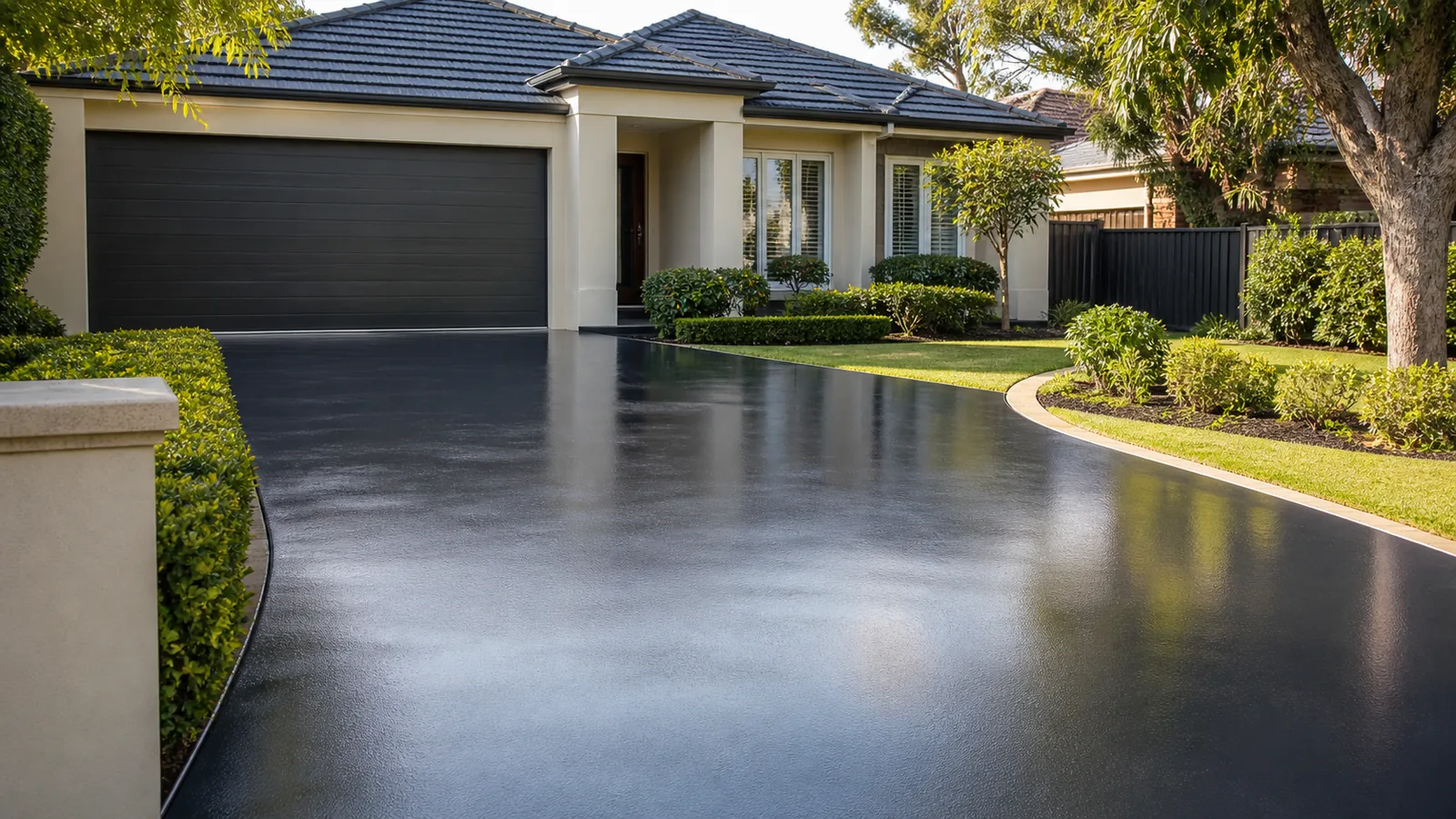
Decide what you want to change
A driveway can look wrong for several different reasons. The colour may clash with a recently painted house, the existing finish may have faded unevenly, or repairs may interrupt an otherwise acceptable surface. Describe which of those problems matters most before asking someone to paint it. A colour change alters the appearance of a suitable surface; it does not automatically restore lost texture, correct levels or resolve a weak existing coating. Separating those goals makes it easier to compare recolouring with a more extensive resurfacing proposal.
Walk from the street to the garage and identify what you want to retain. You may like an existing stencil pattern but dislike the red background. You may want the paver border to remain visible while the concrete centre becomes more neutral. Or you may prefer one restrained finish across a previously busy decorative slab. Take photographs that show the house, driveway and boundaries together. A close-up of the concrete alone cannot explain the visual relationship you are trying to change, and a colour name alone cannot define the result.
Find out what creates the current colour
Ask the contractor to identify whether the colour is part of the concrete, a decorative topping, an old coating or a combination of layers. Look for old invoices and product records. Note areas where the appearance changes at joints, under a parked car or near the garage. Avoid scraping or applying solvent to investigate it yourself. The contractor should explain which existing material will remain and which material needs removal before a new finish can be specified. That distinction affects both the preparation and what the final surface will reveal.
Where the old coating is peeling, request a preparation scope before discussing the new shade. A fresh colour should not be used to avoid the underlying adhesion question. Where the surface is sound but the pattern is worn, ask whether recolouring can meet the desired appearance or whether the decorative layer needs renewal. The stencil restoration guide explores that separate choice. Getting the existing construction right prevents a colour consultation from becoming a promise to fix damage that the proposed coating was never intended to address.
Compare recolouring with resurfacing
Some purpose-made products are intended to recolour suitable existing concrete. The Dulux Avista coloured sealer technical sheet lists exterior applications including plain, stencilled, stamped and resurfaced concrete. That does not make every driveway ready for the product. Ask the applicator to identify the preparation, substrate and exposure requirements for the actual system proposed. A specification should name a product and its limitations, rather than describe the work only as driveway paint in your chosen colour.
Resurfacing is a different scope when a new decorative surface is required. Dulux Avista describes resurfacing options including single colours, flecks and stencilled patterns. In your quote, ask which option addresses the condition of the driveway and which elements are purely aesthetic. Compare removal, repairs, texture and final protection as separate items. Otherwise, a lower-priced colour coat can appear equivalent to a proposal that includes rebuilding a worn decorative surface, even though the promised results are quite different.
Build a small, useful shortlist
Choose candidate colours alongside the fixed materials that will remain: roof, brickwork, garage door, paths, stone and garden edging. If the house is being renovated, identify which finishes are final before approving the driveway. A sample chosen beside an old garage door can become an awkward match after the door is replaced. Limit the first conversation to the combinations you would genuinely accept. Comparing a manageable shortlist helps you notice meaningful differences instead of choosing quickly from a long digital colour chart whose appearance changes between screens.
On the Central Coast, inspect the driveway in its own light rather than borrowing a neighbour's result from another setting. A shaded Erina entry and an open driveway near Terrigal may present the same colour differently to the eye. Visit the shortlist at the times you normally arrive and leave, and view it from inside the house as well as the street. You are choosing a large visible surface next to permanent materials. The right question is how the proposed finish looks at your home, not which shade is currently described as popular.
Require a sample of the complete finish
A colour chip is useful for narrowing choices, but ask for an agreed sample of the intended finished system on a representative surface. Clarify whether it includes the planned texture, decorative flecks and final sealer. The colour of an intermediate layer is not necessarily the appearance you will accept at handover. If a sample cannot be made on the driveway, ask what the alternative sample does and does not represent. Make the limitation specific, such as a different substrate texture, rather than assuming that all examples will look identical.
Review the sample after it has reached the manufacturer's required condition for assessment. Look at it in sun and shade, from standing height and from the usual approach to the garage. Check how it meets the existing border. If you change your mind about the colour, confirm whether a new sample and revised preparation are needed. Record the approved product, colour, texture and location together. A note that says charcoal approved is too vague when different manufacturers and finishes can use similar names for visibly different results.
Give texture and walking routes equal attention
The driveway may also be the route to the front door, bins or side gate. Tell the contractor where people walk and whether those routes are exposed to rain, shade or water from nearby landscaping. Do not select a smooth glossy appearance and leave the practical walking surface to a later conversation. Ask how the proposed system suits the actual driveway and how that will be assessed. Colour approval should not be treated as approval of every other property of the finish, especially where people have already reported slipping.
Manufacturer restrictions can matter even when a product is marketed for exterior concrete. The Avista sheet includes a slope limitation and directs steeper applications to professional advice. Ask the installer to check the relevant restriction for your driveway and their chosen system; adding a slip-reducing additive is not a blanket answer to every situation. If the existing route is difficult to use safely, discuss it through the slippery driveway guide before committing to a finish whose main appeal is its shine.
Plan borders, joints and partial colour changes
A whole-driveway colour change needs an agreed stopping line. Mark whether the work includes the garage apron, side path, steps, paver border and any section approaching the street. A quotation based on a single photograph can leave these edges ambiguous. If only the central slab is being recoloured, request a drawing or marked image showing the boundary. Ask how existing joints and adjoining materials will be treated. An intentional edge is easier to evaluate than an improvised line chosen by the applicator once masking and preparation have already started.
If concrete and pavers are being coordinated, do not assume the same product and process will suit both. The mixed driveway guide explains why separate substrate decisions can still produce a coherent appearance. Think about future repairs too: a strong contrast between the main driveway and border can make maintenance boundaries clearer, while an attempted exact match may draw attention to small differences. Ask what replacement units or later patching would look like. Appearance today and the ability to maintain it later are both legitimate buyer priorities.
Read preparation and access as part of the colour quote
Ask the contractor to state which cleaning, old-coating removal and repairs are included before the decorative work. If there are oil marks, use the oil-stain assessment guide to clarify the treatment and acceptance process. A dark colour is not a reason to skip contamination checks. The quote should also state how unexpected preparation will be handled and when you would be asked to approve a variation. That keeps the sample approval separate from permission to undertake unspecified additional work.
Arrange vehicle storage and pedestrian access for the actual system, with written return-to-use instructions from the applicator. Mention a garage that has no internal access, mobility needs, pets and delivery routes. If the work is staged, ask where stages will end and how the appearance will be coordinated. Do not assume the driveway can be reopened immediately because the surface looks dry. The relevant timing belongs to the product and site conditions, so it should be confirmed as part of the work rather than borrowed from a neighbour's different driveway job.
Make acceptance practical and specific
At handover, compare the driveway with the approved sample and scope under ordinary viewing conditions. Look at the main field, edges, repairs and transitions rather than judging only the broad centre. Ask about any visible variation and record agreed follow-up work. Keep the product details, colour reference, maintenance instructions and sample photographs together. These records make a future touch-up conversation more useful than trying to describe an old shade from memory or selecting a replacement tin because its label appears to use the same colour name.
For an enquiry, send a wide photograph, a close-up of the current finish, your suburb and a description of what you want changed. Explain which borders or patterns you want to retain, whether the driveway has been recoated before and any known stain or slip concern. Ask for the recommended preparation and a sample process alongside the colour options. That gives the contractor a clear brief and gives you a defined decision: whether the proposed system can deliver the appearance you want on the driveway you actually have.